
Serengeti National Park/ What is Serengeti National Park famous for
Serengeti National Park, is a cornerstone of any Tanzania safari, renowned for its vast open savannahs, exceptional wildlife, and breathtaking landscapes which can be visited on by a hired vehicle or by chauffeur . As a UNESCO World Heritage Site, the Serengeti is most famous for the Great Migration—an awe-inspiring natural spectacle where over a million wildebeest, accompanied by zebras and gazelles, move across the plains in search of fresh grazing.
Visitors have the chance to witness dramatic predator-prey encounters, featuring lions, leopards, cheetahs, hyenas, and other iconic species. The park’s diverse ecosystems, from sweeping grasslands to riverine forests and acacia woodlands, support an incredible variety of wildlife, making it one of the most rewarding destinations for game drives.
Accommodation options are plentiful, ranging from luxurious lodges to budget-friendly tented camps—each offering an immersive experience in the heart of nature. And as the day winds down, the Serengeti’s stunning sunsets cast golden light across the plains, creating a magical and unforgettable safari atmosphere.
Serengeti National Park – The Wildlife
The Serengeti boasts an astonishing diversity of wildlife, making it an essential highlight of any Tanzania safari on self drive. The variety of species found here is far too extensive to list in full, which speaks volumes about the richness of this iconic ecosystem.
The park’s most famous spectacle is the Great Migration, which features up to two million wildebeest, 200,000 zebras, and  350,000 gazelles (including Thomson’s, Grant’s, and impalas) moving across the plains in search of greener pastures. This epic journey also draws a remarkable number of predators, resulting in some of the best predator viewing opportunities in Africa.
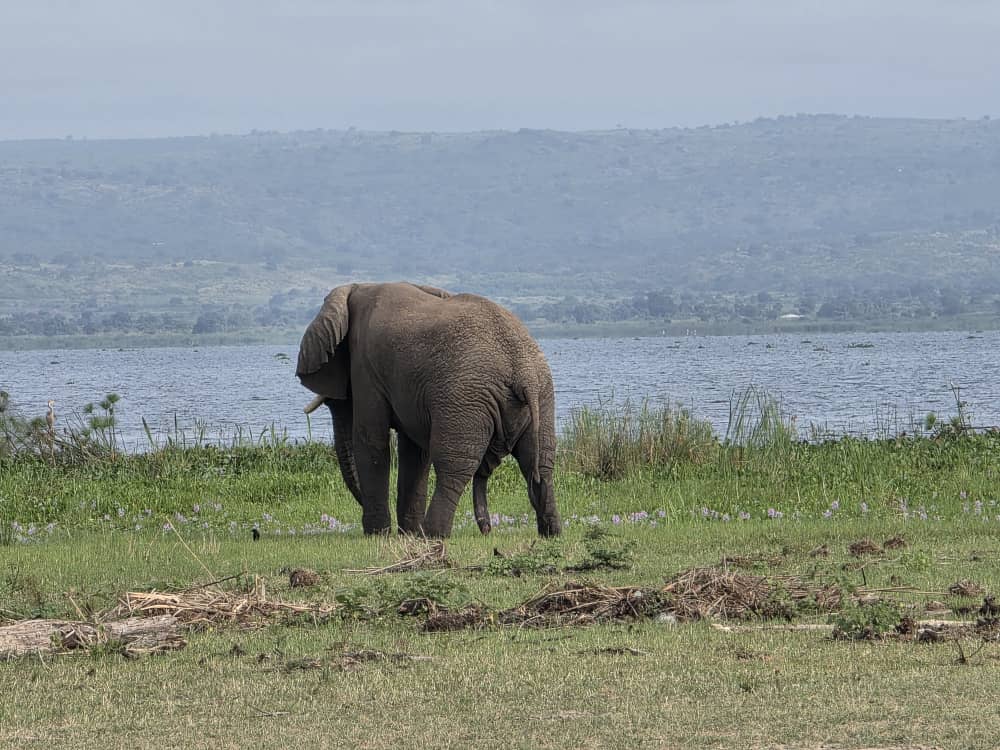
The Serengeti is home to an estimated 3,000–4,000 lions, along with large populations of cheetahs, leopards, and spotted hyenas. Other commonly sighted animals include topi, eland, hartebeest, buffalo, elephants, giraffes, and jackals.
Lesser-seen but equally fascinating species such as the caracal, serval, bat-eared fox, aardvark, aardwolf, hyrax, genet, hares, porcupines, monitor lizards, and crocodiles also inhabit the park.
Primates such as baboons, vervet monkeys, and black-and-white colobus monkeys are frequently observed in the woodland areas.
Bird enthusiasts will be thrilled to explore the Serengeti’s avian life, with over 500 bird species recorded, ranging from raptors and waterfowl to colorful songbirds and seasonal migrants.
Activities to Do on a Serengeti Safari
The primary activity in Serengeti National Park is daytime game driving, offering unforgettable opportunities to witness the park’s incredible wildlife and dramatic landscapes. Night safaris are not permitted within the national park itself. However, several lodges located in the private reserves bordering the Serengeti do offer night drives, providing a chance to observe nocturnal species in action.
Notable examples include Singita’s Grumeti Reserves, where luxury camps like Sasakwa, Faru Faru, and Sabora offer exceptional night game drives. Additionally, Klein’s Camp and other lodges in the Loliondo Game Controlled Area adjacent to the park also allow night excursions.
There are no boating safaris in the Serengeti region due to the nature of its terrain and water bodies.
Walking safaris are not generally allowed inside the main national park, but some areas on the park’s edges do permit guided 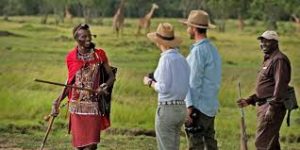 walks. A few select camps in the far north of the Serengeti, and Alex Walker’s Serian in the Southern Serengeti, are among the few that have special permissions to conduct walking safaris within park boundaries.
Please speak to us for the most up-to-date information on walking in the Serengeti, as regulations often change depending on wildlife movement, conservation rules, and permit availability.
erengeti National Park is located in northern Tanzania and is part of the country’s popular Northern Safari Circuit. It can be accessed by road or air, depending on your travel plans, time, and budget.
By Air
The quickest and most convenient way to reach the Serengeti is by flying:
- Domestic flights are available from Arusha, Kilimanjaro International Airport (JRO), or other major safari destinations like Zanzibar, Dar es Salaam, or Ruaha.
- Flights land at various airstrips within the park, including Seronera, Kogatende, Grumeti, Lobo, and Ndutu, depending on which part of the Serengeti you are visiting.
- These flights are typically on small bush planes and offer spectacular views of the landscape below.
By Road
You can self drive across serengeti and in East Africa by road as part of an overland safari from Arusha or other nearby parks:
- From Arusha, the drive takes approximately 7–8 hours via Lake Manyara, Ngorongoro Conservation Area, and Naabi Hill Gate (the main park entrance).
- Many safari tours include stopovers in Tarangire, Lake Manyara, and Ngorongoro Crater, making the journey a full safari experience in itself.
Note: Roads can be rough and dusty, especially in the dry season, so 4×4 vehicles are essential for comfort and access.
Serengeti or Masai Mara Safari?
Separated only by the Kenya–Tanzania border, the Serengeti and Masai Mara share the same sweeping ecosystem, offering similarly breathtaking wildlife experiences. The landscape, wildlife, and overall safari feel are remarkably consistent on both sides—what changes primarily is the country you’re in.
When it comes to the Great Migration, the wildebeest are in the Serengeti year-round, following a circular pattern through 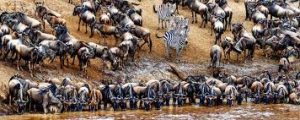 different regions of the park. From July to October, the herds typically cross into the Masai Mara, making this the best time to witness dramatic river crossings on both sides of the border.
However, the Serengeti tends to offer a more spacious and less crowded experience, especially during the migration season. While the Masai Mara is spectacular, it can become quite busy during peak months. In contrast, the Serengeti provides a more immersive and exclusive feel, particularly when viewing the same dramatic crossings and predator activity.
In our view, while both destinations are incredible, the Serengeti edges ahead when it comes to witnessing the Migration—thanks to its vast size, longer migration window, and fewer vehicles at key sightings.